

Trust and commitment are built by the choices you make every day with your partner. Having real love isn’t just about a feeling; it’s about dependable, mutual care during ordinary life and difficult moments—not an obligation to remain where you are unsafe.
In order to be in a deeply committed relationship, you don’t just stay in the relationship; you participate in it. In a safe, mutually chosen partnership, you show consideration when you’re stressed, disagree, and on regular, uneventful days. As time goes on, these choices help create a relationship where you and your partner both feel appreciated, emotionally supported, and safe.
Understanding Commitment in a Relationship
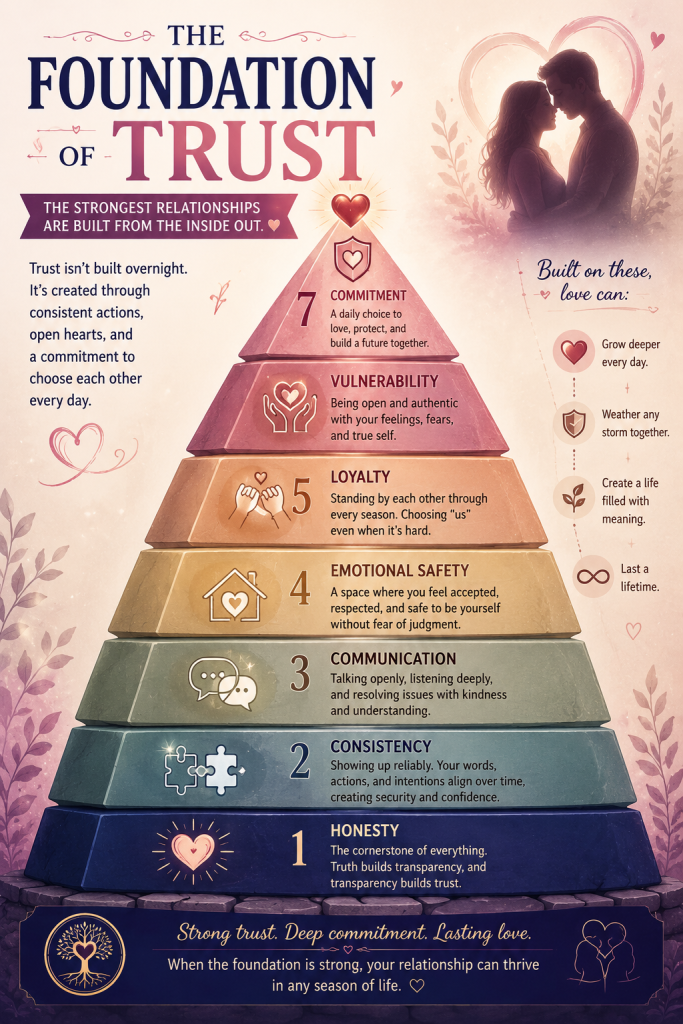
A relationship with respectful conflict isn’t just about status; it’s about sharing your intentions. It’s about knowing that you and your partner are investing in building a relationship that is meaningful together as time goes on.
The way you handle daily life together shows how committed you are. This is how you speak to each other in small interactions, how you deal with conflict, and how you put the relationship first, even when life gets busy.
Think about a time at home where you’re cleaning up, cooking together, or laughing about small things. You might even have disagreements that day. These tiny moments are where commitment shows up. Commitment isn’t always something dramatic, but it’s found in consistency.
Everyday Moments Together
There is power in everyday moments, such as:
- Doing tasks together without resentment.
- Creating a sense of a team.
- Supporting each other’s habits.
- Sharing inside humor or small jokes.
These times might not feel important, but they are the foundation of building a long-term connection with your partner.
Trust and Emotional Security
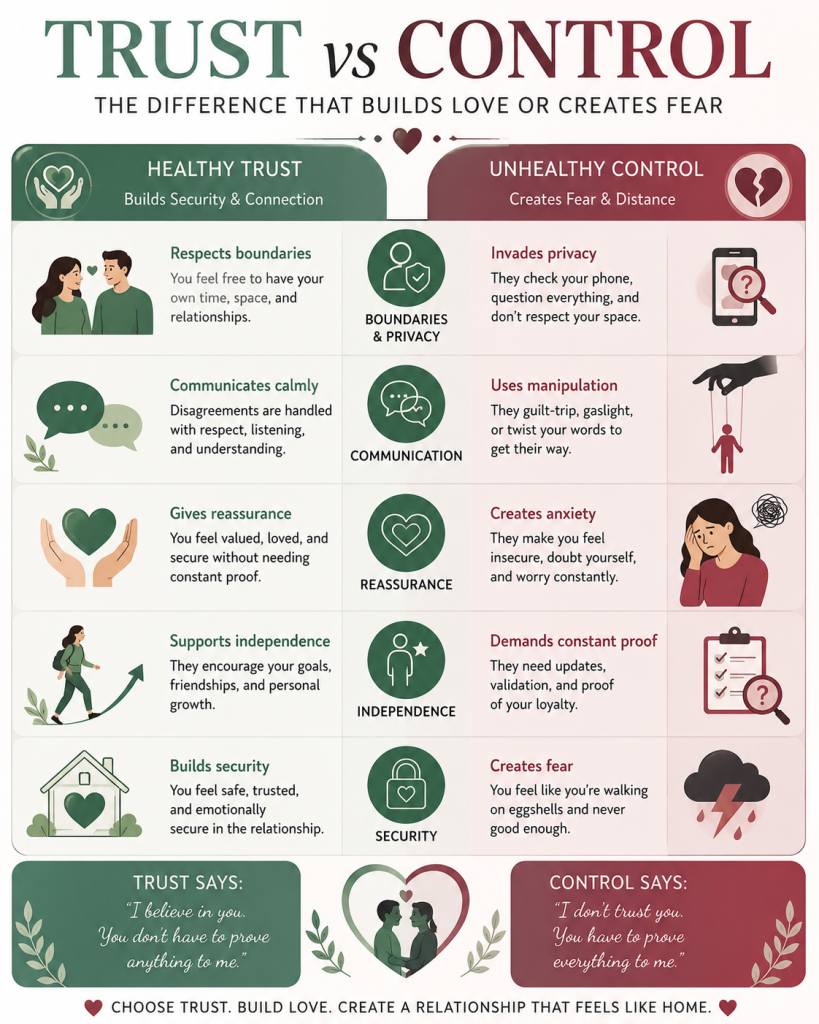
When you genuinely care about your partner, they become important to you. That goes beyond convenience or what’s going on around you. You don’t see them as something that’s replaceable, but as an important part of your life experience and your life journey.
You show how much you treasure someone by showing them appreciation. This isn’t just about thinking positively about your partner; it’s about showing them how much you care about them by giving them attention and through your actions and words.
This is where trust grows. When a person feels valued and emotionally safe, they are willing to be vulnerable and open in their real selves. This is how to build trust:
- Be thankful even for small things.
- Notice when your partner puts in effort and tell them.
- Raise specific concerns without insults or humiliation.
- Choose respect even during disagreements.
When appreciation becomes a habit, trust grows.
Commitment is Doing and Not Just Saying
Commitment isn’t just making a promise; it’s ongoing actions. Something that you show repeatedly through your own behavior.
You have opportunities each day to either strengthen or weaken your connection with your partner. Picking commitment means that you’re doing what you can to protect your relationship, even when no one’s watching.
Commitment also means that you aren’t doing behaviors that create distance, such as being secretive, talking negatively about your partner, or being dismissive.
Showing Commitment Through Behavior
Here are some behaviors that show commitment:
- Considering both partners’ needs and agreed boundaries when making decisions.
- Working through problems instead of avoiding them.
- Talking to your partner instead of shutting down.
- Doing what you say.
Even though these actions might seem small, doing them creates a stable and strong relationship.
Challenges That Make Commitment Stronger
No relationship is perfect, and every relationship faces hard times. When health issues, losses, stress, or life changes happen, this can test even the strongest relationships.
A healthy relationship doesn’t mean that there are no challenges, but it means being willing to face these problems together.
When times get hard, commitment may become more visible through mutual support and practical help. It does not require accepting coercion, threats, violence or repeated boundary violations.
Strong Couples Do Things Differently
Here are some things strong couples do:
- Support each other without keeping score.
- Grow and change together.
- Stay present even when conversations are hard.
- Have patience when times are stressful.
- Take responsibility and discuss specific concerns respectfully.
Challenges that are handled the right way can make the connection stronger instead of breaking it.
Why Emotional Awareness Is Important
Emotional awareness is important because it helps build trust and commitment. When you can understand your own emotions and your partner’s emotions, you respond thoughtfully instead of reacting impulsively.
Reacting thoughtfully can create a safer emotional environment where both partners feel respected and heard. Here are some ways to build emotional awareness:
- When in conflict, take time to pause before reacting.
- Ask questions and don’t make assumptions.
- Listen to understand and not just to respond.
- Express your feelings clearly.
If you and your partner are both emotionally aware, you can create stronger bonds.
Picking Your Partner Each Day
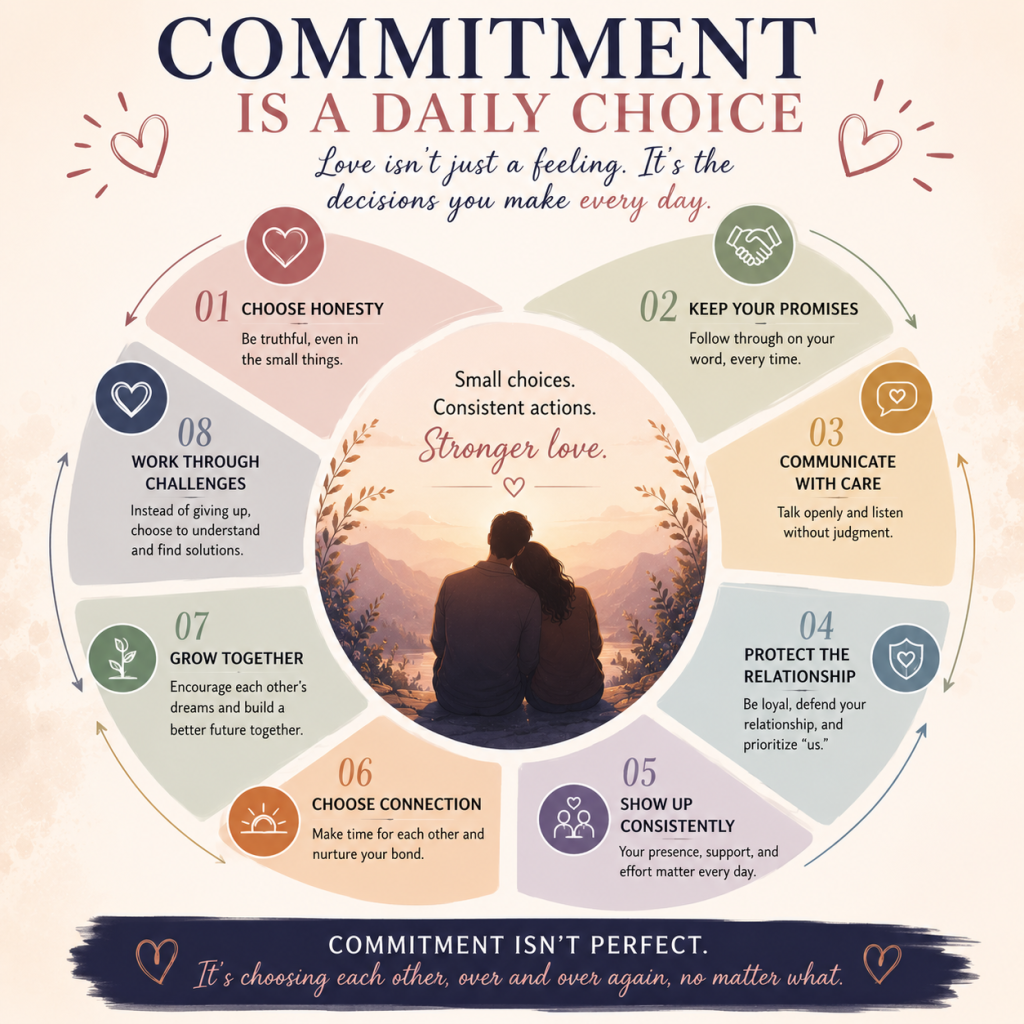
There are many times throughout the day when your partner might not be physically by you, but you can still choose them.
You pick your partner when you consider what your partner would feel before you make a decision. You pick them when you do life with integrity, and you pick them when you stay loyal in your actions and your thoughts.
These choices, even though they’re invisible, help to strengthen your relationship as time goes on. Here are some choices that can build long-term trust in your relationships:
- Respecting boundaries.
- Respecting emotional needs.
- Being consistent in both words and actions.
- Being reliable even in your small commitments.
Building trust doesn’t happen immediately or with big situations, but it shows up with dependable behavior as time goes on.
Micro-Choice Effect
One truth about relationships that’s often overlooked is that they get stronger by small, repeated decisions instead of big, dramatic decisions. This article calls that pattern the “micro-choice effect”; it is a descriptive phrase, not a validated clinical model. Each day you’ll make choices such as:
- Choosing to respond calmly or to react emotionally.
- Choosing to connect with your partner or to distance yourself.
- Choosing to listen or interrupt.
Even though these choices might seem small, as time goes on, they create patterns, and these patterns help to define the relationship.
When you’re aware of these micro choices, you have the ability to intentionally change your relationship positively.
Emotional Safety
Here are some signs of emotional safety in your relationship:
- You’re comfortable being yourself without fear of judgment.
- You express your thoughts in an honest way.
- You trust your partner to respond to you with care.
- You feel secure even when you disagree.
Having emotional safety means that you have empathy, mutual respect, and consistency. This is one of the most valuable parts of repair after hurt.
How to Measure the Strength of a Relationship
Instead of always asking if you’re happy all the time, it’s better to ask how you treat each other during everyday life and hard times.
A strong relationship doesn’t mean that you’re always going to be happy, but it’s about support, respect, and choosing each other as time goes on.
Healthy and Committed Relationships
In a healthy and committed relationship, you will feel:
- Valued and appreciated.
- That you can deal with conflict without fear.
- That you can trust your partner’s intentions.
- That you work well as a team.
These can be encouraging signs, but no checklist guarantees a relationship will last.
Final Thoughts: Trust and Commitment are a Process
Trust and commitment are a process, and it comes through daily behaviors. As consistency, intentional choices, and emotional awareness are created, so is trust.
By picking your partner over and over again through ordinary times and challenging moments, you are creating a relationship that is supportive, meaningful, and stable with your partner.
Love isn’t just something that you feel, but it’s something that you keep building.
Frequently Asked Questions
1. What does trust look like in a relationship?
Trust looks like honesty, consistency, emotional safety, respect for boundaries, and knowing your partner’s words and actions usually match.
2. What does commitment mean in a relationship?
Commitment means choosing the relationship through daily actions, not just words. It includes loyalty, effort, communication, and shared responsibility.
3. Can a relationship survive without trust?
A relationship may continue without trust, but it usually becomes stressful, insecure, and emotionally draining unless both partners work to rebuild it.
4. How do you build trust with your partner?
You build trust by being honest, keeping promises, listening carefully, respecting boundaries, apologizing when needed, and showing consistency over time.